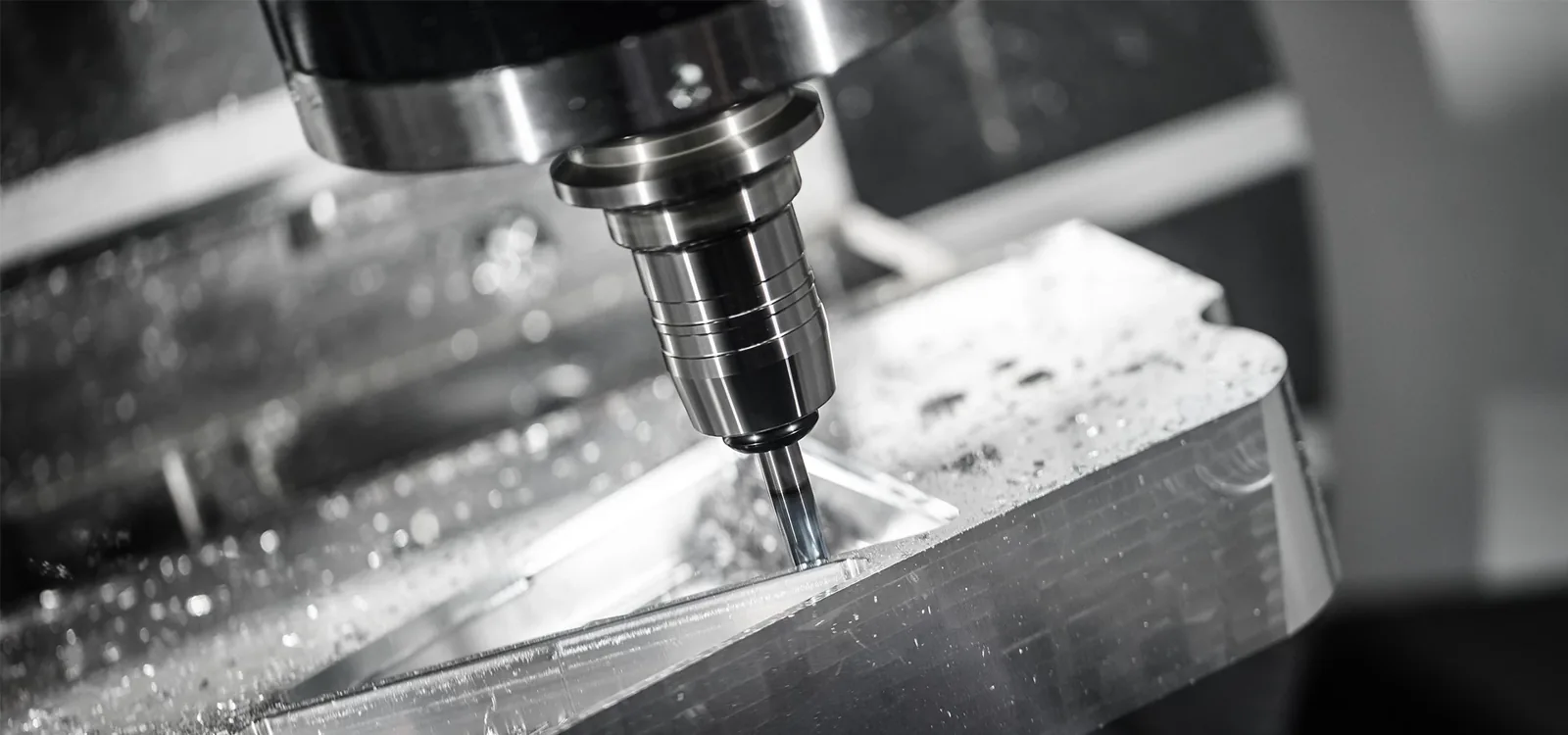
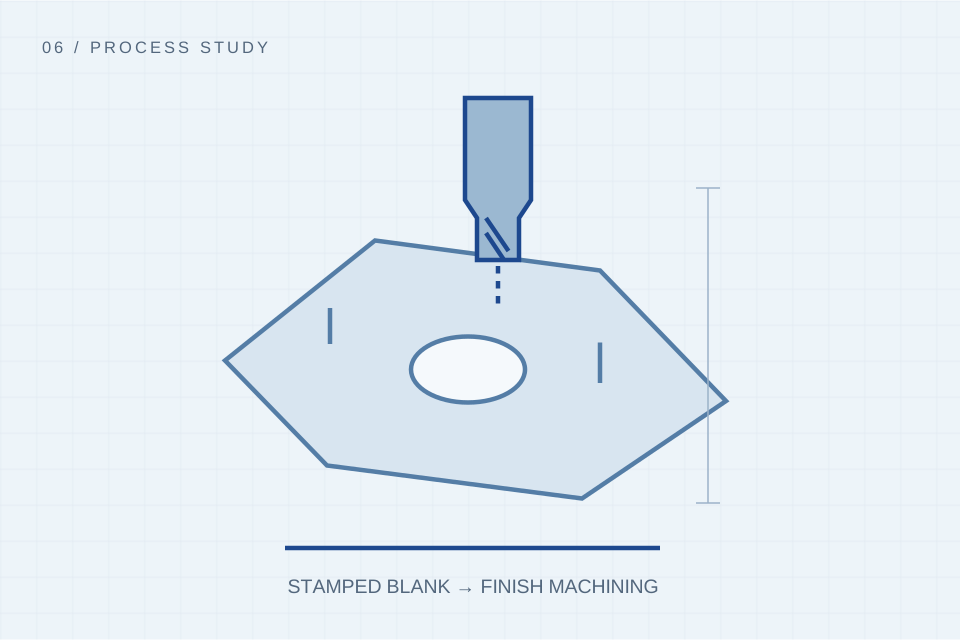
What is stamped-part machining?
Stamped-part machining follows stamping or forming where selected features need a defined final condition. Machining can establish accessible holes, seats or interfaces after the initial shape exists. Thin sections and formed geometry require support to avoid distortion during clamping and cutting.
Key specifications
Process references and example callouts are identified below. CHIHENG confirms the accepted material, dimensions and treatment requirements in the part quotation.
| Parameter | Reference / what to specify |
|---|---|
| Materials | Supply the stamping material specification, condition and blank revision. |
| Tolerance | Define size and geometry on the final drawing. Example callout: Ø20.00 ±0.02 mm; this illustrates a requirement, not a guaranteed capacity. |
| Film / colour | No coating is created by cutting. Specify any later treatment, thickness and colour separately. |
| Part size | Supply the complete CAD model or blank envelope; available size and tool access require quotation review. |
| Critical features | Supply sheet grade, thickness, bend details and blank revision. |
| Quantity / timing | State prototype quantity, repeat demand and required date. The accepted quantity and delivery belong in the quotation. |
Applications
Automation
Formed brackets with machined locating or mounting features.
Electronics
Stamped components with finished seats or interfaces.
Industrial assemblies
Formed parts with customer-defined machined relationships.
Working with CHIHENG
A direct conversation with our team, from your first drawing to delivery.
A reply within 24 hours
Send us your drawing and questions. Our team will reply within 24 hours and help you work out the next step.
An experienced engineering team
Talk through materials, tolerances and finishing with engineers who understand how your part will be made.
Machining equipment
We use our machining equipment and practical manufacturing experience to turn your drawings into finished parts.
Competitive worldwide shipping
We offer competitive shipping solutions for customers around the world, with options to suit your destination and delivery schedule.
Process steps
- Review the stamped and finished geometry
Match the material, thickness and formed-part drawing to the final component. Identify the holes, seats or interfaces that need machining. - Support the formed part
Review the available locating surfaces and variation in the stamped blank. Plan clamping and support around the features to be finished. - Machine the selected features
Complete the specified machining operations on the stamped blank. Check the relationship between formed surfaces and finished interfaces. - Check the assembly requirements
Inspect the required features and complete the specified finish and records. Pack the parts to protect their formed shape and machined surfaces.
Stamped-Part Machining vs Stamping Only
Additional machining is considered when specific holes, seats or interfaces need a separate finished condition. Check whether the stamping route already meets the complete drawing.
| Comparison point | Stamped-Part Machining | Stamping Only |
|---|---|---|
| Manufacturing route | A stamped blank followed by selected machining | Features produced through stamping and forming |
| Functional interfaces | Selected holes or seats receive final machining | Features follow the specified stamping route |
| Locating and support | Review formed-part variation and support during machining | Review tooling and forming variation |
| When to select the route | Selected interfaces require a separately machined condition | Stamping meets all requirements on the finished drawing |
Machining details for stamped parts
- Include the sheet grade, thickness, bend details and current blank drawing.
- Show the support and datum surfaces available after forming.
- Specify burr direction and whether the part is inspected free-standing or held in a fixture.
FAQ
Why machine a component after stamping?
Some formed components need selected holes, seats or interfaces established after the initial shape has been created. Machining may be considered where those features have a separate finished requirement. The drawing must identify the functional reason and access, rather than assuming every stamped surface benefits from an additional machining operation.
Can clamping distort a thin stamped component?
Thin sections and formed geometry can move when clamped or cut. Provide sheet thickness, bend information and the available locating surfaces so support can be planned. Where the free-state condition differs from the restrained condition, define how the part is accepted and measured instead of treating a clamped measurement as automatically representative.
Which materials can be used for stamped-part machining?
Provide the exact material grade and condition with the starting-blank specification and finished drawing. Suitability depends on machinability, geometry, workholding and the final surface requirement. CHIHENG reviews those details together rather than treating a general material name as acceptance of every tolerance, part size or finishing route.
Can stamped-part machining include surface finishing?
Include the required finish with the machining drawing, blank material condition and quantity. Specify thickness where applicable, protected threads or bores, cosmetic faces and final dimensions after treatment. CHIHENG can review these requirements in one enquiry so the quotation identifies machining, finishing and inspection as parts of the same finished component.
How are tolerance and delivery confirmed for stamped-part machining?
State the required dimensions, geometric controls, quantity and target delivery date in the enquiry. Blank availability, condition, workholding and final inspection affect the proposed route. The quotation confirms the accepted scope and schedule for that component; a general service description is not a guaranteed tolerance or production lead time.